Showing posts with label Film and TV. Show all posts

Monday, April 18, 2022

Film: Thoughts on The Batman

It’s been nearly a year and a half since I’ve posted anything, and four years since I’ve posted a film review. So here’s both!

As of today, The Batman is available for digital download, as well as streaming on HBO Max.

I have been a Batman fan for as long as I can remember. He is by far my favorite superhero.

My gateway drug was the classic Adam West TV series from the ‘60s, which I discovered as a young child. I loved that show. My grandmother even handmade a cape and cowl for me to wear, which I did often. 

While my fondness for the character somewhat tapered off for a while, it was renewed with a vengeance with the publication of Frank Miller’s The Dark Knight Returns and Batman: Year One when I was in high school. Though there will always be a warm place in my heart for the campy Batman of Adam West, my preference is for a darker, moodier interpretation of Batman.


Outside of the comics, my favorite version of Batman has always been Batman: The Animated Series, which I consider damn near perfect. That being said, big screen, live-action Batman movies have tended to leave me a bit cold. I didn’t share the widespread love for Christopher Nolan’s Dark Knight Trilogy, finding Christian Bale’s take on the character a bit too normal. I didn’t watch any of the Zach Snyder movies with Ben Affleck, because quite frankly I can’t stand Snyder as a director. And I don’t think Joel Schumacher’s Batman movies are worth commenting on.


I really liked Tim Burton’s Batman Returns, his first Batman less so. Besides the visuals and twisted atmosphere, what really worked for me with the Burton films was Michael Keaton’s performance as Bruce Wayne and Batman. Keaton understood the fundamental weirdness of the character. I always thought a theme of the best Batman stories was that they were essentially about a mentally ill hero battling mentally ill villains. Burton and Keaton got that, as did the animated series to a certain degree.


That brings me (finally!) to Matt Reeves’ The Batman, starring Robert Pattinson in the title role. This is quite simply the live-action Batman I’ve been waiting for for the last 35+ years. 


I won’t delve into the plot too much, as that’s been covered in countless other reviews. In overall feel, it owes quite a bit to Jeph Loeb’s excellent comic series Batman: The Long Halloween without being a direct adaptation. 

One thing too many Batman movies seem to forget is that the character is known as “The World’s Greatest Detective.” After all, he first appeared in the May, 1939 issue of Detective Comics. From the very beginning, he was something of an amalgamation of Zorro and Sherlock Holmes, something creators Bob Kane and Bill Finger readily acknowledged. 

Director Reeves told MovieMaker he specifically wanted to tap into the noirish sensibilities of films such as Chinatown and Klute


“This idea of a place that is corrupt, and you try to swim against the tide in order to fight against it and make a difference, is quintessential Batman. And at the center of those noir stories is almost always the detective, right? And that’s why he is the world’s greatest detective. And so this story is, in addition to being almost a horror movie, and a thriller, and an action movie, at its core, it’s also very much a detective story. It’s very narrative.”


Pattinson said of The Batman, “It’s a detective movie. It happens all the time in the graphic novels, but it’s always kind of on the back-burner in the movies.”

Want another, even nerdier source for Batman’s persona as a detective? Check out his stats from the long out-of-print DC Heroes Role-Playing Game by Mayfair Games (which I once owned). Notice that his skills as a detective and scientist are higher than his skills as a martial artist. He may be a great fighter, but he’s an even better thinker. Why else would Batman even be in the Justice League, considering he’s physically outclassed by most of its members? Superman has flat-out stated that he considers Batman to be one of the most brilliant minds on the planet.

The Batman is definitely a mystery movie. In fact, many of the action sequences could conceivably be cut without really impacting the plot of the overall film. Not that I’d want the action sequences cut; quite the contrary. I thought they were very well done. One highlight was a car chase that was reminiscent of John Frankenheimer’s Ronin or William Friedkin’s The French Connection and To Live and Die in L.A.

The fights were brutal and more or less believable, especially considering this is a superhero movie. According to stunt coordinator Robert Alonzo, "The goal of fight training with Rob Pattinson was to allow the jeopardy to come in much closer than he’s used to in order to eliminate anticipatory movement and heighten his close proximity reactivity. With this as a primary goal, we trained him in FMA – Escrima/Kali/Arnis, Penjak Silat, Muay Thai, JKD, boxing, and kickboxing. For Rob, we avoided kicking and used more hammer fists, elbows, and knees, while also drilling with sticks that would later enable him not only to improve his reaction time in closer pockets of engagement, but also to pick up anything and use it as a weapon." As someone who has trained in all of those arts, I heartily concur with Alonzo’s approach. In addition, Pattinson trained in Brazilian Jiu-Jitsu under the legendary Rigan Machado. Also, it was refreshing that Pattinson’s Batman wasn’t invincible. Going against multiple opponents, he got knocked down and he got hurt. 

While I’m on the subject of fight training and physical matters, YouTuber JaxBlade's did a video about Robert Pattinson's Batman physique which I totally endorse. Specifically, JaxBlade said he looks like a fighter, not a bodybuilder. It's more believable, and totally fits with this interpretation of the character. Plus, many combat athletes don't look super-chiseled or have six-pack abs. Even the great Georges St-Pierre said in an interview that he maintains his sculpted look more for endorsement deals than for fighting.  As for training, Pattinson ran, worked out with a weighted sandbag, and practiced martial arts. That's a practical, functional regimen. 

The Batman is perhaps the Batmaniest Batman movie so far. The majority of the time Pattinson is on screen, it’s as Batman. There are fewer scenes of him as Bruce Wayne. The characterization of Wayne is quite different than in the comics or other films. Gone is the rich playboy persona. Reeves has said that this Bruce Wayne is based in part on Kurt Cobain, and Nirvana’s “Something in the Way” is used to great effect early in the movie. While purists may balk, I found it to be a valid, perhaps even a bit more believable interpretation. 


As for Robert Pattinson’s overall performance, I thought it was all around excellent. Like Michael Keaton all those years ago, Pattinson understands the fundamental strangeness of Batman and Bruce Wayne. This is a dark superhero. More than a few commentators have described this as a Batman-for-Goths, and as an old-school Goth, I can’t disagree. The thing is, it works, and Pattinson’s performance is a major part of why it works.


The rest of the cast is uniformly great as well. This is a true ensemble film. ZoĆ« Kravitz is a strong, independent Selena Kyle, serving as both an ally and a foil to Batman. (As a side-note, a short but provocative scene features the Dark Knight getting to experience the creepiness of the male gaze through her eyes.) The always wonderful Jeffrey Wright as lieutenant James Gordon is on a roll, with equally strong recent performances in No Time to Die and The French Dispatch. Colin Farrell — who I’ve always thought was underappreciated as an actor — is totally unrecognizable in voice and appearance as Oswald "Oz" Cobblepot aka the Penguin. At times he seems to be channeling Robert DeNiro and Joe Pesci simultaneously. John Turturro is spot-on as Carmine Falcone. My only disappointment was the rather limited screen time allotted to Andy Serkis as Alfred Pennyworth. Hopefully we’ll see more of him in future films.
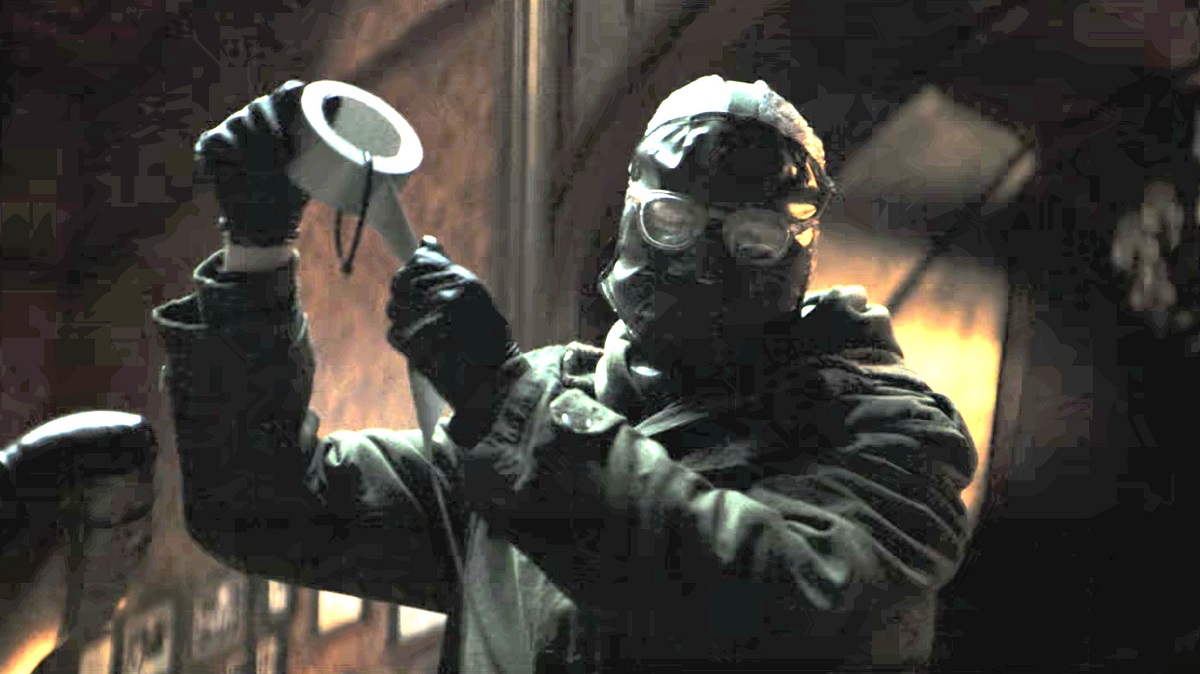

That leaves Paul Dano as Edward Nashton, the Riddler. He brings a true horror movie vibe to the film, especially during his first appearance on Halloween night. While the late Heath Ledger’s performance as the Joker in The Dark Knight is justifiably legendary, in some ways I found Dano’s performance more successful. Ledger’s Joker at times comes across as almost cool in a twisted way. Dano’s Riddler does not. He is a pathetic, evil individual. And his ultimate goals and plot are far closer to reality than people may realize. Without going into spoilers or details, suffice to say I’ve read a bit about the connections between social media and mass shootings, and the events shown in The Batman are not at all farfetched. (See, for example, this article by Malcolm Gladwell.)


Much of the location filming for The Batman took place in London and Liverpool. While I love the purposely anachronistic sets of Tim Burton’s films, this version of Gotham is more in line with what I imagined the city to be like. I always pictured Batman’s stomping grounds as being akin to the New York City of ‘70s films such as Taxi Driver or The Taking of Pelham 1-2-3. That clearly is the vibe Reeves is going for, and thanks to the locations and the evocative cinematography of Greig Fraser, he succeeds. It's rather how I imagine Darren Aronofsky's aborted Batman: Year One movie would have looked and felt.


The thing that really struck me as I watched The Batman was that, for the very first time, I felt like I was watching a Batman comic, not a Batman movie. I’m not saying the film isn’t cinematic; far from it. However, it isn’t as beholden to current superhero/action movie tropes and cliches. Reeves does not feel the need to bombard the audience with non-stop action or cheesy humor. He concentrates on mood, allowing the story to unfold at a deliberate pace, and for characterizations to develop organically. A few viewers and critics have complained that The Batman is too long and boring. I strongly disagree. Of course, I readily admit to having something of a weakness for deliberately-paced cinema. Compared to some films I love — such as the 1974 French film ​​Celine and Julie Go Boating, which is over three hours long and basically plotless — The Batman is a fast-paced rollercoaster of thrills. 


I am very much looking forward to seeing how Matt Reeves and Robert Pattinson proceed with the Batman franchise. Rumor has it the Court of Owls might figure in the next installment, which would be interesting. I just hope the new owners of DC Entertainment don’t interfere too much. I admit to being something of an adherent of auteur theory, and believe a major reason The Batman succeeded and stands apart from other superhero films is due to Reeves being given a great deal of creative control. We’ll see if he maintains that level of control in the future.

Thursday, March 29, 2018

Film: Quick Thoughts About Black Panther

I finally saw Black Panther, weeks after seemingly every other human on the planet watched it. This late in the game, an in-depth movie review seems rather superfluous, though I will say I thoroughly enjoyed it. Instead, this post will focus on some quick thoughts and general observations about the film.

One of the reasons I was slow to see Black Panther is because I’m rather ambivalent about superhero cinema and the Marvel Cinematic Universe in particular (I think I may be one of the few people who strongly disliked Iron Man). Yet in many ways Black Panther isn’t really a superhero movie at all. It struck me as more of a science fiction/fantasy hybrid with an occasional detour into James Bond territory. (I’d love to see director Ryan Coogler tackle a Bond flick, or at the very least a Mission: Impossible.) If anything, the blend of technology, hand-to-hand fighting, mysticism, and monarchy reminded me somewhat of Frank Herbert’s masterpiece Dune, with vibranium as something of a stand-in for spice. Considering I love this sort of thing—I even liked The Chronicles of Riddick—it is no surprise I much prefer Black Panther over other superhero-based movies.

Not surprisingly, I paid quite a bit of attention to the fight scenes and weaponry. To prepare for his role as T’Challa, Chadwick Boseman worked extensively with martial artist Marrese Crump. According to Crump, T’Challa’s fighting style is a primarily a blend of Kali, Muay Thai, and Capoeira. If you know what you’re looking for, you can clearly see all these elements in the film. There’s also some prominent uses of Jujitsu.

In all due respect to the king of Wakanda, my favorite fight moves were displayed by T’Challa’s faithful spy Nakia (Lupita Nyong’o). During a scene set in a Korean casino, she pulls off a cool Kotegaeshi (I think that’s the proper name), a wrist throw from traditional Japanese Jujitsu. Later, she performs an excellent snake disarm against Killmonger (Michael B. Jordan). As a Kali practitioner, I was especially excited to see the snake disarm.

(You can see the snake disarm about 11 seconds in here. The wrist lock is about 40 seconds in here.)
The film also had some nods to Africa’s  traditional weaponry. For example, Killmonger channels the spirit of famous African monarch Shaka Zulu when he breaks the shaft of his longish spear, turning it into a Zulu iklwa. M'Baku (Winston Duke), leader of the Jabari tribe, carries a staff resembling an elongated version of a Zulu fighting stick.

I do wish the film contained more indigenous African martial arts, such as Senagese grappling (did you know wrestling is the No. 1 sport in Senegal?) or Zulu stick fighting. Thanks to my teacher Burton Richardson, I’ve dabbled a bit in Zulu stick work, and find it fun and fascinating. While there is still a tendency to immediately think of East Asia whenever martial arts are mentioned, Africa has a long, rich martial tradition that is well-worth exploring onscreen.

However, that’s a minor quibble. As great as the fight sequences were, what really made Black Panther work were the characters and their struggles. Despite the excellent special effects, design, and action scenes, the film was fundamentally about people, which is part of the reason audiences are responding to it with such passion. Yes, Black Panther is a popcorn movie, but it’s a popcorn movie with heart.

Tuesday, November 25, 2014

Film Review: John Wick

I rarely post film reviews. In fact, this is only my second one (here's the first). However, I was
so taken by John Wick I felt compelled to write about it.

I'm not going to bother with recounting the plot. You can find that anywhere. Besides, plots are for graveyards. Also, consider this the official SPOILERS AHEAD warning. 


John Wick is another entry in the tough-guy-coming-out-of-retirement-to-wreak-havoc genre. What sets it apart from lesser movies of this ilk is the style and care that obviously went into it. 

Perkins enjoys a drink between hits.
The cast is top-notch. Keanu Reeves is so good it's almost as if he's a different actor. I don't know if it's because he's a bit older now, but he seems to have way more (cliche alert!) gravitas in this film. Mikael Nyqvist portrayal of crime-lord Viggo Tarasov brings complexity to what otherwise could be a standard villain role. Alfie Allen is at his sniveling best. Adrianne Palicki gives it her all as assassin Perkins. Equally good are the character roles: Willem Dafoe, Ian McShane, and John Leguizamo all prove the maxim that there are no small parts, only small actors. It was also great to see David Patrick Kelly on the big screen again. You might nor recognize his name, but you've surely seen his work.

There are several homages to classic thrillers. In one scene, an extra is seen reading a copy of Trevanian's Shibumi, which is one of the great hitman novels. The concept of The Continental—a hotel that serves as a sanctuary for assassins and where no "business" can take place—echoes the Abelard Sanction safehouses of David Morrell's book The Brotherhood of the Rose.

One of the most prominent homages involves the name of the club that serves as the setting
Inside the Red Circle.
for one of the film's best action sequences: the Red Circle. In French, the red circle is le cercle rouge, which happens to be the name of an excellent crime drama directed by Jean-Pierre Melville. Melville also directed Le Samourai, one of the coolest, most influential hitman films ever made.

The idea of the circle manifests itself not only in the name of the club, but in the film's dramatic arc. Early on, it is revealed that John Wick is largely responsible for creating the crime empire of Russian gangster Viggo Tarasov. Wick worked for Tarasov, but wanted to leave the criminal life to get married. Tarasov said Wick could make a clean break if he carried out a seemingly impossible assignment. Of course, Wick succeeded in his task, and from that Tarasov was able to built his extensive operation. Years later, Wick manages to destroy the same organization he helped to built. A red circle, indeed.

Thursday, July 11, 2013

James Bond on Losing

Largo: "Do you lose as gracefully as you win?"

Bond: "I don't know. I've never lost."


Thursday, May 30, 2013

Film Review: The Bladed Hand


Last night I attended the Hawaii premiere of The Bladed Hand: The Global Impact of the Filipino Martial Arts at the Honolulu Art Academy. As a student and teacher of Kali, I may be biased, but I thought it was one of the best martial arts documentaries I have ever seen.

Here's a description of the film from producer Sonny Sison:
A documentary featuring numerous Filipino Martial Arts luminaries and established styles and systems propagating the growth of an indigenous form of self defense from the Philippines with historic and social contributions to the world at large including its influence from military and law enforcement training to Hollywood films and television.
The film took over two years to complete, and was a labor of love for director Jay Ignacio.

The Bladed Hand proceeded in a fairly chronological fashion, moving from the indigenous, pre-Spanish conquest roots of FMA to modern trends of the early and mid-20th century through FMAs increasing popularity in Hollywood and the international special forces community.

An obvious highlight of the movie was the great footage of important Grandmasters training and sparring. It was a real pleasure to see Antonio "Tatang" Ilustrisimo in his early 80s beating the crap out of guys a quarter his age. If I didn't already think FMA was incredibly cool, I would after seeing all of this footage, and if I didn't already train in FMA, I would immediately start.

Some of the most famous masters of FMA were highlighted in the film including Rodel Dagooc, Bert Labaniego, Daniel “Mumbakki” Foronda, Christopher 'Topher' Ricketts, and Dan Inosanto. I'm also pleased to note that my own instructor, Burton Richardson of Battlefield Kali, was also prominently featured.

Roland Dantes and some Austrian guy.
Though I've trained in Filipino Martial Arts (FMA) for over 10 years and have read quite a bit about its history and lineage, there was still quite a bit in the film that was new to me. There were several Grandmasters profiled that I had never heard of. For example, I am embarrassed to say I was unfamiliar with the late Roland Dantes, a bodybuilder and martial artist who was quite well known in the Philippines and played a considerable role in the modern development of FMA. (He was also one big guy… sort of a Filipino Arnold Schwarzenegger.)

I think part of the reason The Bladed Hand is so successful as a documentary is because Jay Ignacio is not himself a practitioner of FMA. Why is this a good thing? Because it means he doesn’t have a stake in the endless (and needless) bickering and quarreling that seems to be part of the FMA community. Also, because Ignacio didn’t initially know very much about the subject, he has a legitimate curiosity and unbiased desire to learn that reflects in the film.

There was a touch of melancholy to the film that is worth noting. As the film points out, FMA is not particularly popular or well regarded in the Philippines. Most Filipinos who practice martial arts gravitate towards arts such as Karate or Tae Kwon Do. Why? Partially because those arts are far more structured than most FMA. (Plus they have neat uniforms and multicolored belts and things like that.) There also seems to be a class issue involved, as FMA is apparently deemed something only poor people do by many Filipinos. (There may be some truth to that: Despite being an incredibly important and influential martial artist and war hero, Antonio Ilustrisimo died poor and was buried in an unmarked grave.)

Because few Filipinos are interested in FMA, as the various Grandmasters die (and four died while The Bladed Hand was being made) no one is opting to carry on their legacies. Since most traditional FMA is passed on verbally and via teaching as opposed to through books, this means techniques developed over generations risk being lost forever. For better of for worse, the future of Filipino Martial Arts may very well lie in the hands of non-Filipinos.

Do I have any quibbles with the film? Nothing serious. I would have liked to see a bit more about FMA empty hand arts such as Panantukan and Dumog. And it would have been nice to include something about the influence of FMA on western boxing. But these are small complaints that no doubt reflect my own preferences and biases.

If you have an interest in martial arts, you should check out The Bladed Hand: The Global Impact of the Filipino Martial Arts. However, if you have even a slight interest in Filipino Martial Arts, than the film is a must-see. It deepened my depth, appreciation, and love of the art I am proud to teach and practice.

(FYI: The Bladed Hand is slated for a DVD release in Fall 2013.)


The Bladed Hand from ShowVIS LLC on Vimeo.

Monday, May 13, 2013

Finding Real Life Inspiration from Fictional Heroes: The Bourne Trilogy


I was very excited when I first heard about The Bourne Identity. The idea of an old-fashioned thriller directed by Doug Liman (who had already directed the excellent films Swingers and Go) and starring Matt Damon sounded very promising. And then I discovered that Damon would be training in the Filipino art of Kali for the role. That was just the icing on the cake!

While I had not trained in Kali myself at that point, I was very interested in the art based not only on what I had read but on some family history. My grandfather—a Marine saber champion—knew some Kali from his time fighting in the Pacific during World War II. He was taught by Filipino rebels working against Japan. Plus, the idea of swinging sticks around just sounded fun.

Doug Liman explained how Kali was more than just Bourne's fighting style. It came to define the character.
The martial arts actually ended up being the thing that helped us define Jason Bourne and his entire character. Right after Matt agreed to do the film, we arranged for demonstrations of different martial arts and Kali really inspired us. It is ridiculously efficient. You don't break a sweat or expend any energy, you use your opponents energy against him. And we thought - that's Jason Bourne, that's how he'll do everything in this movie. He'll figure out the simplest, least energetic, most efficient way to get something done. For example, when the cops surround his car, he's going to calmly pull out the map, browse through it and figure out a route before he starts driving.
(I respectfully disagree about the "you don't break a sweat or expend any energy" line!)

Then when I actually saw Matt Damon's Jason Bourne in action, I knew this was what I wanted to pursue. The mixture of Kali, Boxing, and Jeet Kune Do looked practical, efficient, and (I must admit) cool. After all, the fight scene in Bourne's Paris apartment is far and away my favorite fight scene in any film.


When I finally got serious about martial arts training, I specifically looked for a school that would incorporate some Filipino martial arts as part of the curriculum. I ended up finding Burton Richardson's JKD Unlimited and Battlefield Kali,  which utilized not only Kali but also kickboxing, grappling, etc. I started training with Burton back in 2002 and haven't looked back. Not only am I still a student of Burton's, but I'm one of his instructors as well.

And all in part because of Jason Bourne. No wonder I still sometimes listen to Moby's "Extreme Ways" on the way to train!


The Bourne Trilogy is inspiring in other, non-martial ways as well. The character of Jason Bourne is street smart, with excellent survival and tradecraft skills. He also knows a variety of languages. These are qualities worth having. Plus, both Bourne (and Bond) are partially responsible for my love of simple black jackets.

Also, the films have a moral and political complexity not usually found in a Hollywood action movie, which I appreciate.

Amazingly, the Bourne Trilogy maintained a high standard of quality throughout all three films. (The Damon-less The Bourne Legacy is an outlier.) The final movie, The Bourne Ultimatum, even managed to beat the dreaded three-peat curse and proved to be just as good as the first film.

Monday, May 6, 2013

Finding Real Life Inspiration from Fictional Heroes: Man on Fire

This book is probably best known as the inspiration for two films: The first made in 1987 starring Scott Glenn, the second in 2004 with Denzel Washington. Alas, I haven't seen the Glenn version, but I did enjoy the latter film, even if I thought the last third or so had some serious story flaws.

Unlike the 2004 movie, the 1981 novel Man on Fire takes place in Italy and around the Mediterranean. One thing in particular I liked about the book is how it describes the hero, Marcus Creasy, getting back into shape after being seriously wounded in a gunfight. He doesn't do anything fancy. Creasy instead retreats to a small island of Gozo in Malta, where he spends his time going on long ocean swims and helping villagers with projects such as building stone walls out of heavy rocks. 

I'm a big fan of ocean swims, especially for active rest days. Sometimes when I'm out there and the currents feel especially strong, I think of Creasy's hard swims and it helps to motivate me to keep going.

A beach in Gozo.
The novel Man on Fire is also rich in characterization. You learn quite a bit about the characters, and Creasy in particular is given a good back story. The sense of place is also strong. After reading the book, you might very well want to take a trip to Italy and Gozo.

Actually,  a fair number of Japanese travelers have made the trip to Gozo specifically because of the Creasy collection. In an interview on an excellent A.J. Quinnell fansite, Quinnell said
The Japanese connect to Creasy. They see him as a 'Ronin' - a disgraced Samurai warrior who spends his time trying to redeem himself by doing good deeds. 
Quinnell with some of his Japanese fans.
Incidentally, Man on Fire is the first of a series featuring the character of Marcus Creasy. I can't comment on the rest of the books as I haven't read them, though at some point I will.

Tuesday, February 5, 2013

All Hail Jason King!

Imagine a television show with very questionable plots, a somewhat ineffectual hero, and cinematography that looks as if the cameraman has never bothered to clean his lenses. That, in a nutshell, is Jason King. Sounds awful, doesn't it? Well, it's not... and in fact Jason King is one of my favorite TV programs.

Why? I could mention the bevy of beautiful women, the cool European locations, or the wacky early '70s vibe. But the real draw here is the character of Jason King himself, brilliantly portrayed by the super charismatic Peter Wyngarde.

The show is about a thriller writer who finds himself frequently involved in real-life intrigue. But that doesn't matter. It's all just an excuse for Wyngarde to do his thing, tossing of ad-libbed lines like "A bit too early for coffee; I'll have a Scotch." He is probably the most flamboyant leading man in any TV show ever produced. Jason King is the type to spend several minutes of screen time trying to decide what silk scarf to wear and orders champagne and strawberries for breakfast. He's also whiny, greedy, and often bullied. But he somehow remains cool nonetheless. In one episode, we watch King strolling through Paris (real Paris, not a set) buying items for a dinner he'll prepare later. This should be boring, yet it isn't.

While Jason King enjoyed very good ratings, it didn't last. Peter Wyngarde's career was undone by scandals involving his homosexuality, and his acting roles become fewer and far between. (By the way, he was fantastic as the masked Klytus in 1980's Flash Gordon with future Bond Timothy Dalton.) It's a real shame, because Wyngarde was (is?) a very entertaining, talented actor with real screen presence and a wonderful voice. 


Thursday, January 10, 2013

Rolex and "I Spy"

My all-time favorite American TV spy show is by far "I Spy." It had great locations, believable espionage stories, and—most important of all—the chemistry and wit of stars Bill Cosby and the late Robert Culp. And one minor bonus: Cosby and Culp wore really cool Rolex Pepsi GMTs.

The enthusiasts over at watchsrolex.com wrote a nice piece in memory of Robert Culp, who passed away in 2010. You can read it here.